

Nvidia's troubles go beyond Jensen Huang: AI chip rivals are closing in on tech giant
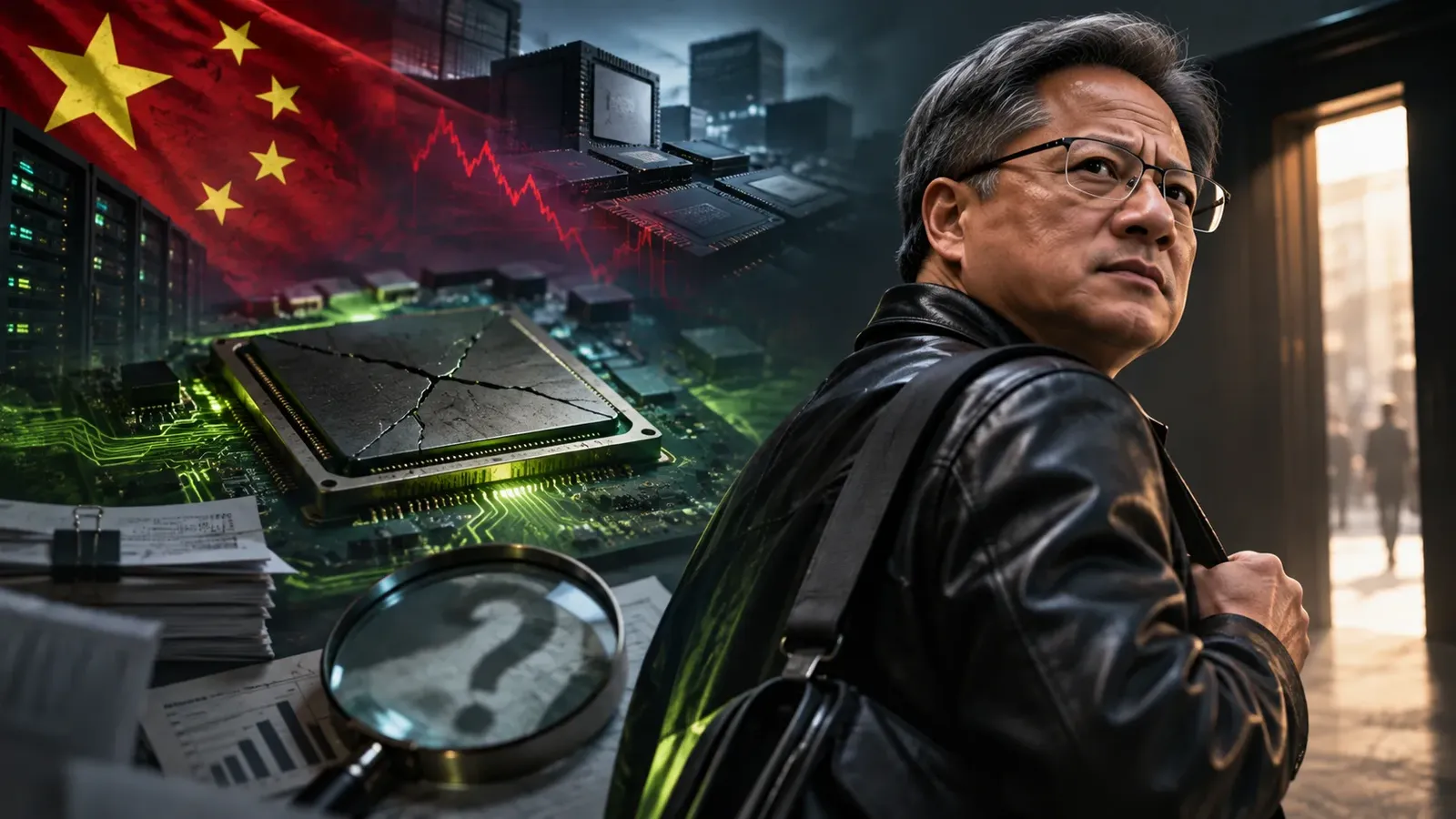
SAN FRANCISCO, United States — Nvidia built its dominance by supplying the powerful computer chips behind the artificial intelligence revolution. But as the company faces a major leadership shake-up, a growing challenge is emerging: its competitors are getting closer.
The world's leading AI chipmaker is confronting mounting pressure from established technology companies, emerging chip manufacturers, and even some of its biggest customers, who are developing alternatives to reduce their dependence on Nvidia.
The challenges come at a difficult time for the company following the resignation of longtime chief executive Jensen Huang, who stepped down in November amid controversy surrounding his personal relationships and reported connections to a Singapore-based technology company under scrutiny over suspected transfers of advanced chips to China.

Nvidia's board appointed Chief Financial Officer Colette Kress as interim CEO while it searches for a permanent successor.
However, the company's problems extend well beyond its leadership transition.
According to a report by WIRED, Nvidia continues to dominate the AI accelerator market, accounting for approximately 80 percent of sales. But competitors are gradually gaining ground, raising questions about how long the company can maintain its commanding position.
RIVALS ARE BUILDING THEIR OWN AI CHIPS
Among Nvidia's most formidable competitors is Advanced Micro Devices (AMD), which has steadily expanded its presence in the AI chip market.
Meanwhile, technology giants Google, Amazon, and Microsoft are investing in their own specialized processors to power AI systems and reduce their reliance on Nvidia's hardware.
These companies have a significant advantage: they operate massive cloud computing businesses and have the financial resources to develop their own technology.
Smaller companies are also entering the competition with specialized processors designed to handle increasingly complex AI workloads.
The growing competition could eventually give businesses more choices and reduce their dependence on a single chip supplier.
CHINA ADDS ANOTHER CHALLENGE
Nvidia is also facing difficulties in China, one of the world's largest technology markets.
US export restrictions have limited China's access to Nvidia's most advanced AI processors, while Beijing continues to support the development of its domestic semiconductor industry.
Chinese technology company Huawei has emerged as one of the players developing alternatives, with some local AI companies reportedly using its processors to train and operate advanced AI models.
WIRED reported that China accounted for only around 8 percent of Nvidia's revenue in 2026, down from approximately 20 percent in 2024.
The restrictions have created an increasingly complicated market for Nvidia, which must navigate geopolitical tensions while competing against manufacturers developing their own alternatives.
NVIDIA'S BIGGEST ADVANTAGE COULD ALSO BECOME VULNERABLE
For years, one of Nvidia's strongest competitive advantages has been its CUDA software platform, which allows developers to build and run applications optimized for its processors.
The technology helped establish a strong ecosystem around Nvidia's hardware, making it difficult for businesses to switch to competing products.
But artificial intelligence itself could gradually weaken that advantage.
Newer AI systems are becoming increasingly capable of writing and adapting computer code, potentially making it easier for developers to transfer applications from Nvidia processors to competing hardware.
This could lower one of the biggest barriers preventing companies from switching suppliers.
The growing popularity of AI assistants and autonomous AI agents is also changing the industry's computing requirements, creating additional opportunities for companies specializing in different types of processors.
A NEW CHAPTER FOR THE AI GIANT
Despite these challenges, Nvidia remains one of the most influential companies in the global technology industry.
Its revenue climbed from approximately $26.91 billion in January 2022 to $215.94 billion in January 2026, reflecting the extraordinary demand for computing power during the AI boom.
But its next chapter could prove more complicated.
With a new interim leadership structure, intensifying competition, restrictions on its Chinese market, and rapidly evolving AI technology, Nvidia must continue innovating to maintain its position.
The question is no longer simply who will lead Nvidia after Jensen Huang.
It is whether the company that helped power the artificial intelligence revolution can remain ahead of the very industry it helped create.